'/%3E%3C/svg%3E)
'/%3E%3Cpath%20fill='%23b2b2b2'%20d='M241%20382q0%2016%2017%2026%2017%2011%2042%2011t42-11q16-11%2017-26V269H241'/%3E%3Cpath%20fill='%239f7e00'%20d='M241%20379q0%2014%208%2023%209%209%2021%209%2014%200%2021-9%209-9%209-23V269h-59'/%3E%3Cpath%20d='M241%20339v-70h59v110q0%2014-9%2023l-6%205v-68h-15v72q-8%200-14-4v-68zm59%2040c0%2022%2015%2032%2029%2032%2021%200%2030-18%2030-32v-40h-59'/%3E%3Cpath%20fill='%239f7e00'%20d='M266%20277v5h2v12h-3v-5h2v-5h-9v5h2v5h-4v9h3v18h-5v10h34v-10h-5v-18h3v-9h-4v-5h2v-5h-9v5h2v5h-3v-12h2v-5zm42%20101q0%2010%206%2017%206%206%2015%207%2010-1%2016-7%206-7%206-17v-29h-43'/%3E%3Ccircle%20fill='%230044ad'%20cx='329.5'%20cy='372'%20r='6'/%3E%3Cellipse%20fill='%230044ad'%20cx='300'%20cy='340'%20rx='16'%20ry='21'/%3E%3C/svg%3E)

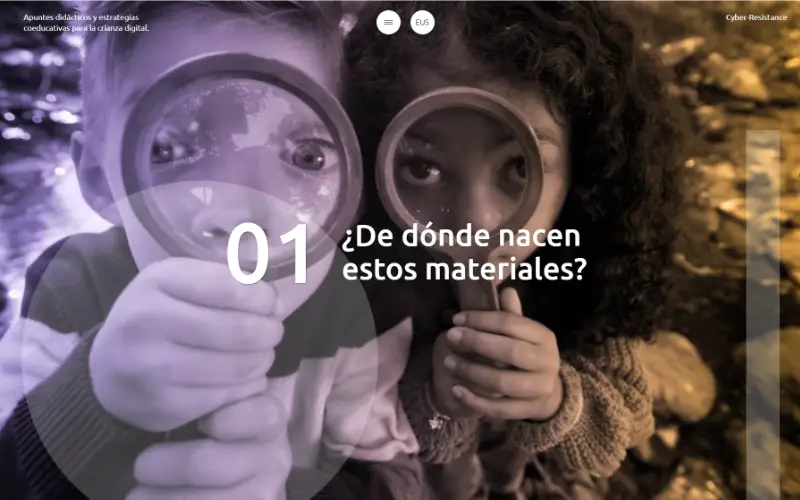
Opciónate and the University of Deusto have recently published new educational materials and the executive summary of the comparative results between Gran Canaria and Euskadi of the research project “Cyber-Resistance: Facing the Third Digital Gender Divide and Cyberviolence in Childhood”, conducted in collaboration with the University of Deusto and funded by the Spanish Ministry of Science, Innovation and Universities within the framework of the Knowledge Generation Projects programme.
Developed between 2023 and 2026 in the Basque Country and Gran Canaria, the project aimed at analysing how girls and boys between the ages of 5 and 13 experience, learn and interact in digital environments, paying special attention to gender inequalities, cyberviolence and the opportunities for building resistance and care practices online.
A participatory research process based on the experiences of children, families and teachers
The research was conducted with the help of qualitative, participatory and inclusive methodologies involving children, families and teaching staff in both territories.
Through discussion groups, listening spaces and collective work sessions, the project explored digital experiences from the real-life perspectives of participants themselves, identifying both the risks and inequalities present in digital environments and the educational and community opportunities of promoting more critical and equal digital citizenship.
This approach enabled an in-depth understanding of how technology use and digital dynamics are shaped by factors such as gender, age and socialisation models. An intersectional and coeducational perspective was shaping the research process.
Key findings on inequalities and cyberviolence in digital environments
Among its key findings, the study highlights that access to digital devices, platforms and social networks starts at increasingly early ages and that gender inequalities are already reproduced in childhood through technology use, online content consumption and forms of digital interaction.
The research also identifies the persistence of sexist stereotypes in video games, social media and digital platforms, as well as different forms of symbolic violence, exclusion and cyberviolence that particularly affect girls and young adolescents.
Furthermore, the report shows how many of these dynamics become normalised from an early age through digital role models, everyday practices and cultural consumption patterns that continue to reproduce inequalities and limit opportunities for equal participation.
At the same time, the project highlights the self-care, support and resistance strategies developed by families, teachers and children, emphasising the essential role of educational communities and families in building safer, more critical and violence-free digital parenting practices.
Educational materials for reflection and action
As part of the project, several educational materials and teaching resources have been developed to encourage critical reflection and provide practical tools for supporting children and adolescents in digital environments.
These materials address issues such as gender stereotypes in social media and video games, exposure to violent or sexist content, online exclusion dynamics and the role of adults in digital education.
Through practical activities, participatory dynamics and coeducational strategies, the resources encourage users to reflect on their own digital practices and consider key questions regarding the role models we provide, the limits we establish and the ways we talk about social media, video games and digital violence.
Thus, the research findings were transformed into exercises that provide useful, accessible and applicable tools for educational, family and community contexts.
Commitment to critical and equal digital education
At Opciónate, we remain committed to projects that generate applied knowledge and practical tools to address the current challenges of digitalisation from a feminist, critical and rights-based perspective. Both the executive summary as well as concomitant educational materials represent another step forward in promoting safer, more inclusive and more equal digital environments for children and adolescents.
The materials and executive summary can be downloaded free of charge at:
https://cyber-resistance.deusto.es/, and in the materials section of our website:
https://opcionate.com/es/materiales/